Two Components That Make or Break Your Chimney's Safety
When most Northglenn homeowners think about chimney maintenance, they think about cleaning out soot and ash. But two of the most important components in your entire chimney system are ones you probably never see: the flue liner running from your firebox all the way to the top of the chimney, and the damper that controls airflow between the two. Both can fail quietly, and when they do, the consequences range from high energy bills to carbon monoxide exposure to chimney fires. Superior Northglenn Chimney Sweeps inspects and services both components regularly, and we want Northglenn homeowners to understand what they're dealing with.
What Does a Flue Liner Do?
The flue liner is the interior channel of your chimney that contains and directs combustion gases — smoke, carbon monoxide, water vapor, and unburned particulates — safely out of your home. It does three critical things simultaneously:
- Contains heat — protecting the surrounding masonry and combustible structural materials from temperatures that can reach 1,000°F or higher during a normal fire.
- Contains corrosive gases — combustion byproducts are acidic and would rapidly deteriorate unprotected masonry without a liner between them and the brick.
- Maintains draft — the liner's diameter and smooth surface are calibrated to your appliance's output, ensuring that gases move efficiently upward and out rather than back into your living space.
Most homes built before the 1940s in Colorado have unlined chimneys — bare masonry with no liner at all. Homes built between the 1940s and 1980s typically have clay tile liners, which work well until they crack. Modern homes generally have either clay tile or a prefabricated metal liner system from the factory.
How Flue Liners Fail in Northglenn Homes
Clay tile liners are durable but not immune to failure. In Northglenn's climate, the combination of intense heat from fires and freezing temperatures when the chimney is cold creates expansion and contraction stress that cracks tiles over time. A chimney fire — even a small one you may not have noticed — can crack an entire run of tiles in one event. Gas appliance inserts also create condensate that is more corrosive than wood smoke byproducts, and an oversized clay tile liner paired with a modern efficient gas insert is a recipe for rapid liner deterioration.
Signs your liner may be compromised include white staining on the exterior masonry, smoky odors in rooms adjacent to the chimney, carbon monoxide detector alerts, and visible debris falling into the firebox. A Level II chimney inspection with video camera is the only reliable way to assess the full condition of your liner — our camera goes from the firebox all the way to the top of the flue so we can see every tile and joint.
Chimney Liner Installation: What to Expect
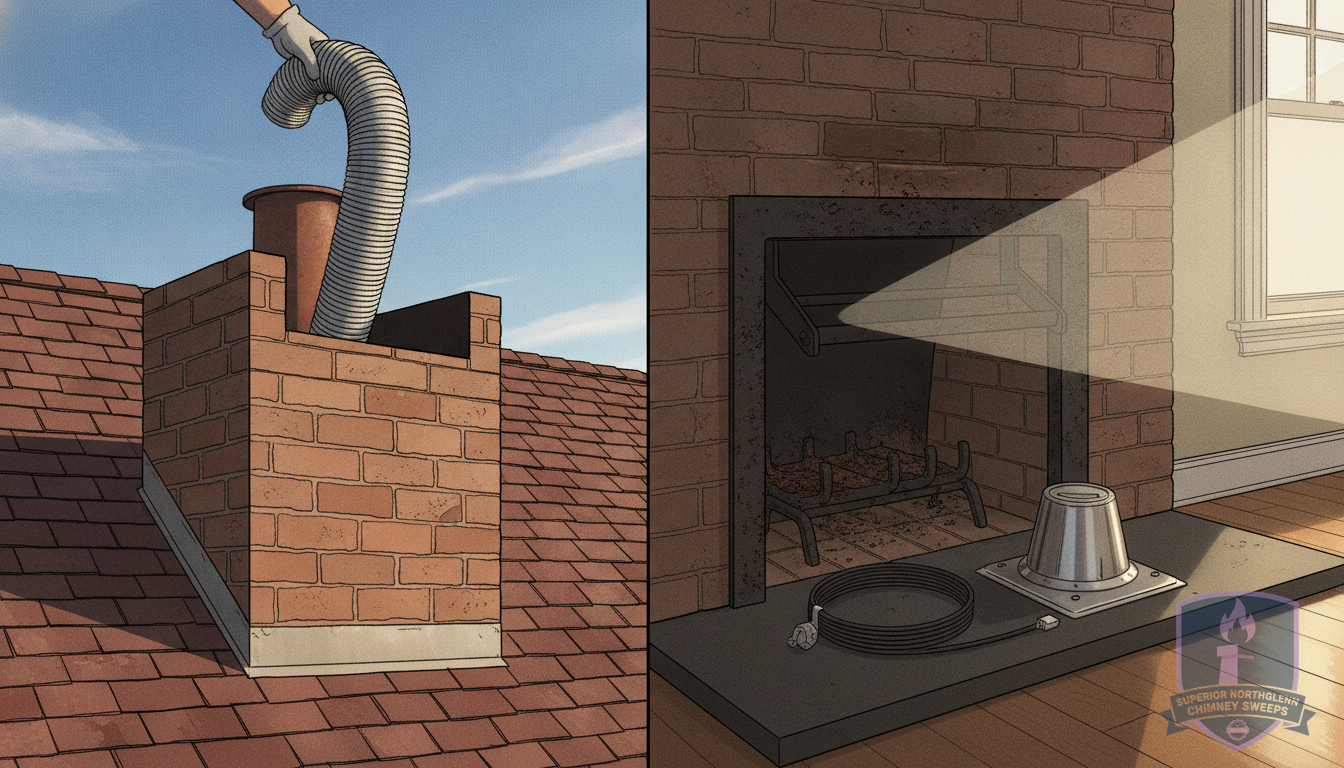
If our inspection reveals a cracked, missing, or inadequate liner, chimney liner installation is typically the most cost-effective path forward compared to full chimney reconstruction. We install UL-listed stainless steel liner systems — both rigid sections for straight flues and flexible corrugated liner for flues with offsets — sized precisely to your heating appliance's BTU output and your chimney's height.
For older Northglenn homes converting from wood-burning to a gas fireplace insert, a properly sized flexible stainless steel liner is the standard recommendation and is typically required by code. The installation process is minimally invasive: we feed the liner from the top of the chimney down to the appliance connection, secure it with a top plate, insulate where required, and finish with a post-installation video inspection to verify every connection is airtight. Most liner installations are completed in a single day.
Many homeowners combine a liner installation with a new chimney cap in Northglenn to protect their liner investment from rain and animals entering through the top of the flue.
Understanding Your Fireplace Damper
The damper is the movable metal plate that sits just above your firebox at the base of the flue — called a throat damper — or at the very top of the chimney in the case of a top-mount damper. Its job is simple but critical: open when you're using the fireplace, closed tight when you're not. A properly sealed damper when the fireplace is idle prevents your furnace-heated air from escaping straight up the chimney all winter — a draft that can add meaningfully to your heating bills and make rooms near the fireplace feel perpetually chilly.
How to Know If Your Damper Is Failing
- Cold air pouring into the room from the fireplace when it's not in use — a classic sign of a warped or corroded damper that no longer seals.
- Difficulty moving the damper handle — rust and heat warping cause throat dampers to seize open or closed over time.
- Smoke backing into the room when a fire is lit — a damper stuck partially closed restricts draft and forces smoke into your living space.
- Visible rust or missing sections on the damper plate when you look up into the firebox with a flashlight.
Our fireplace damper repair and replacement service covers everything from adjusting or freeing a stuck throat damper to installing a modern top-mount damper system. Top-mount dampers seal with a silicone gasket at the top of the flue — significantly more airtight than the traditional cast-iron throat design — and simultaneously function as a chimney cap, blocking rain and animals. For Northglenn homeowners dealing with energy loss through the fireplace, upgrading to a top-mount damper is one of the highest-return improvements available.
Pairing Liner and Damper Service With a Full Chimney Checkup
Because liner issues and damper problems can share symptoms — poor draft, smoke intrusion, cold air in the room — we always recommend a thorough chimney inspection before committing to any repair. A camera inspection definitively tells us whether the issue originates at the damper, in the liner, or somewhere else entirely. This diagnostic step saves our customers money by ensuring we fix the actual problem rather than guessing.
We serve homeowners throughout the Northglenn area, including Westminster, Thornton, Federal Heights, and Broomfield. If you're heading into fire season with questions about your chimney's liner or damper, give us a call before you light your first fire of the year.
Contact Superior Northglenn Chimney Sweeps at +1 (720) 991-0718 or [email protected]. We're open Monday through Sunday, 8:00 AM to 6:00 PM, and happy to answer your questions before you book.
Questions about chimney in Northglenn, CO? We're happy to help — no sales pressure.
Talk to a Local Pro
Call +17209910718 or fill out our online form for a free, no-obligation quote.
Request Free Quote